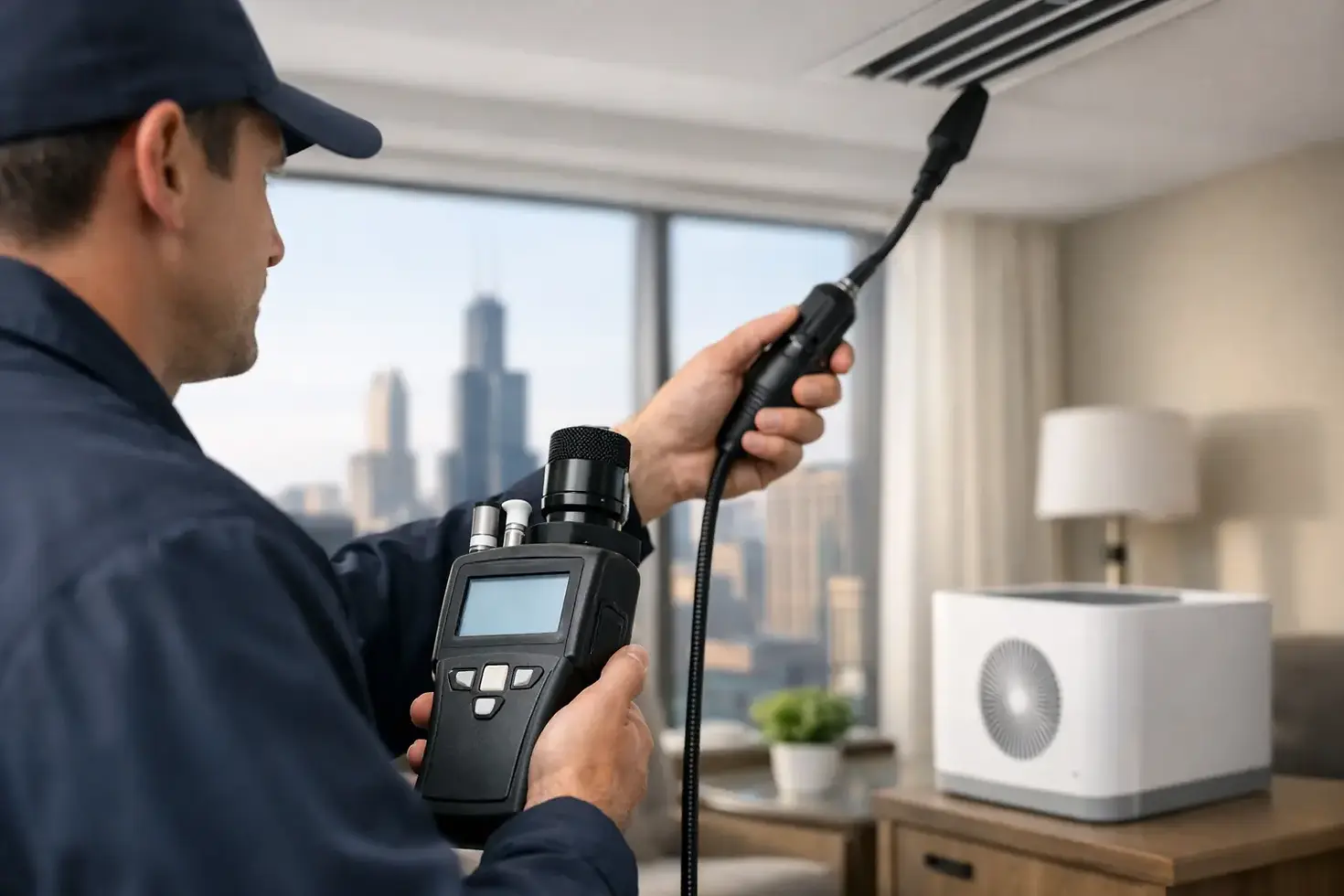
Indoor Air Quality Inspection Chicago

That stale smell in the hallway, the dust that keeps coming back, the office that feels stuffy by noon - those are not small annoyances. They are often signs that it is time for an indoor air quality inspection Chicago property owners can count on for clear answers. In a city full of older homes, mixed-use buildings, garden units, and tightly sealed apartments, indoor air problems show up fast and they do not always come from one obvious source.
Chicago buildings deal with a unique mix of issues. Long heating seasons can dry out air and push dust through ductwork. Summer humidity can feed mold growth in basements, crawl spaces, and poorly ventilated bathrooms. Older properties may have aging duct systems, outdated exhaust setups, or hidden moisture around plumbing and HVAC equipment. If people in the building are coughing more, dealing with headaches, noticing odors, or struggling with allergy symptoms indoors, guessing is a bad plan. An inspection gives you real information so you can fix the right problem the first time.
What an indoor air quality inspection in Chicago actually looks for
A good inspection is not just someone walking in and saying the air feels bad. It should focus on the systems and conditions that affect air inside the property every day. That usually starts with ventilation, filtration, humidity levels, airflow patterns, and obvious contamination sources.
In many Chicago homes and small commercial spaces, the HVAC system is part of the problem or part of the solution. Dirty filters, leaky return ducts, poorly balanced airflow, clogged drain lines, or neglected equipment can all affect what people are breathing. In other cases, the root issue is moisture behind walls, weak bathroom exhaust, combustion byproducts, or dust and debris collecting in neglected spaces.
The goal of an indoor air quality inspection Chicago customers book should be simple - find where pollutants or unhealthy conditions are coming from, measure what can be measured, and recommend practical next steps that fit the building and the budget.
Why Chicago properties have different indoor air challenges
Chicago is hard on buildings. Winter forces windows shut for months, which reduces fresh-air exchange. Heating systems run constantly, and that can spread dust, dry out the air, and highlight duct leaks. Then summer hits with humidity, and moisture starts collecting in all the places you do not want it.
Older two-flats, brick bungalows, courtyard buildings, and commercial storefronts each have their own weak points. A basement apartment may fight dampness and musty odors. A renovated condo may be sealed tightly enough to trap pollutants indoors. A small business with customers coming and going all day may have ventilation problems that do not show up until occupancy increases.
That is why local experience matters. A contractor who works in Chicago neighborhoods every day understands how age, layout, weather, and existing systems affect indoor air. There is no one-size-fits-all answer when the same block can have century-old homes next to updated mixed-use properties.
Common signs you need an indoor air quality inspection Chicago service
Sometimes the warning signs are obvious. Sometimes they build slowly and people get used to them. If the air smells musty, chemical-heavy, smoky, or stale, that matters. If certain rooms are always dusty or people feel worse inside than outside, that matters too.
Frequent sneezing, dry throat, irritated eyes, lingering headaches, and unexplained fatigue can all point to air quality issues. So can visible mold spots, recurring condensation on windows, uneven humidity, or rooms that never seem to feel fresh. Landlords may hear repeated complaints from tenants. Business owners may notice staff discomfort or customer comments about odors. Homeowners may just know something feels off even if they cannot explain why.
It also makes sense to schedule an inspection after water damage, remodeling work, HVAC replacement, long vacancies, or moving into a new property. Those transitions often uncover hidden moisture, dust, VOCs, and ventilation problems.
What might be causing poor indoor air quality
Poor indoor air usually comes from a combination of factors, not one dramatic issue. Dust, pet dander, pollen, cooking particles, cleaning products, and off-gassing from building materials all add up. If ventilation is weak, those pollutants stay trapped inside.
Moisture is another major factor. Too much humidity can support mold and mildew growth, especially in basements, bathrooms, utility rooms, and around HVAC components. Too little humidity during winter can irritate skin, sinuses, and throats while making the air feel harsh and uncomfortable.
Combustion appliances also need attention. Furnaces, boilers, water heaters, and stoves can affect indoor air if they are not venting properly. This is especially important in older Chicago properties where equipment upgrades may have happened in phases over many years.
Then there is the ductwork itself. If ducts are leaking, pulling from dirty areas, or circulating debris, indoor air suffers. In some buildings, filtration is simply too weak for the conditions. In others, the equipment is fine but the home or business needs better ventilation and moisture control.
What happens after the inspection
The best inspections do not stop at identifying a problem. They give you a practical path forward. That may mean improving filtration, cleaning or sealing ductwork, correcting airflow issues, addressing excess humidity, upgrading ventilation, or repairing HVAC components that are contributing to the problem.
Sometimes the solution is straightforward and affordable, like replacing a poor filter setup with the right filtration strategy or fixing a bathroom exhaust issue. Other times, especially in older buildings, the answer involves a few coordinated improvements. It depends on the age of the property, the system condition, and how long the issue has been developing.
That is where honest guidance matters. Property owners do not need scare tactics. They need trusted technicians who can explain what is urgent, what can wait, and what will actually improve comfort and air quality. Fair pricing and clear recommendations go a long way when you are trying to make a smart service decision.
Indoor air quality inspection Chicago for homes and small businesses
Residential and commercial buildings share some air quality problems, but the priorities can be different. In homes, people usually care most about family health, comfort, odors, allergies, and dust. In small businesses, the focus may include employee comfort, customer experience, ventilation during occupied hours, and maintaining a professional environment.
A restaurant, salon, office, retail store, daycare, or small apartment building can all have very different air quality needs. Occupancy level, operating hours, equipment use, and building layout all matter. That is why inspections should be based on how the space is actually used, not just square footage.
For landlords and property managers, indoor air issues can quickly turn into repeated complaints and costly turnover. A proper inspection helps separate minor comfort issues from system problems that need real correction. It also helps avoid wasting money on the wrong fix.
Why fast action saves money
Air quality problems tend to spread when they are ignored. Moisture issues become mold issues. Weak airflow puts more strain on heating and cooling equipment. Dirty filters and neglected system components drive up utility costs and reduce performance. Small complaints turn into larger repairs.
Fast service matters because indoor air quality is tied directly to the systems that keep a property livable and efficient. If your furnace is circulating dust, your AC is not controlling humidity, or your exhaust ventilation is failing, waiting usually makes the final bill worse.
That is why many Chicago property owners want one local contractor who can inspect the air quality issue and handle the HVAC, ventilation, electrical, or plumbing-related cause behind it. If moisture, equipment, and airflow are all connected, the fix should be coordinated, not pieced together by guesswork.
Choosing the right contractor for indoor air quality inspection Chicago
Not every contractor approaches air quality the same way. Some will focus only on equipment. Others will oversell solutions without explaining the real cause. You want a company that understands Chicago buildings, shows up ready to inspect the full picture, and gives straightforward recommendations.
Look for certified technicians, transparent pricing, and a service team that can explain findings in plain language. The right contractor should be able to tell you whether the problem is mainly filtration, humidity, ventilation, duct leakage, equipment performance, or a mix of those factors. They should also be honest about trade-offs. For example, tighter filtration can help with airborne particles, but airflow must still stay within system limits. More ventilation can improve freshness, but it has to be balanced with heating and cooling efficiency.
That kind of practical, neighborhood-focused service is what property owners need. Chiwest Heating & Cooling serves Chicago customers who want answers without the runaround, with trusted technicians and fair pricing that make it easier to act quickly.
If the air inside your home, rental, or business does not feel right, trust that instinct. Clean, balanced indoor air affects comfort every day, and getting it inspected early is often the fastest way to protect both the people inside and the systems keeping the property running.


Comments